In virtually every growing business, there is an invisible leak silently draining revenue: the latency gap. A prospective customer clicks on an ad, lands on a service page, fills out an inquiry form with genuine purchase intent, and then... waits. Three hours pass. Or perhaps twelve. By the time a sales representative opens the CRM, reviews the form, and manually types out an email, the prospect has already contacted two competitors, reviewed alternative options, or moved on with their day.
Lead decay is mathematically brutal. When a business fails to engage an inbound inquiry within the first five minutes, the likelihood of qualifying that prospect drops by over 80%. Yet, expecting marketing and sales personnel to manually monitor inboxes 24/7 is operationally unsustainable and inevitably leads to human error.
This is where marketing automation transforms the trajectory of modern enterprises. When properly architected, automation eliminates friction, turns cold traffic into pre-qualified sales opportunities, and liberates leadership teams from mundane administrative repetition.
"Automation is not about sending more generic emails; it is about delivering the exact right message, to the exact right person, through the exact right channel, at the precise micro-moment they demonstrate intent."
What Marketing Automation Really Means in 2026
Many business owners equate marketing automation with basic scheduled email blasts. While automated email sequences remain an essential component, true marketing automation is vastly more sophisticated.
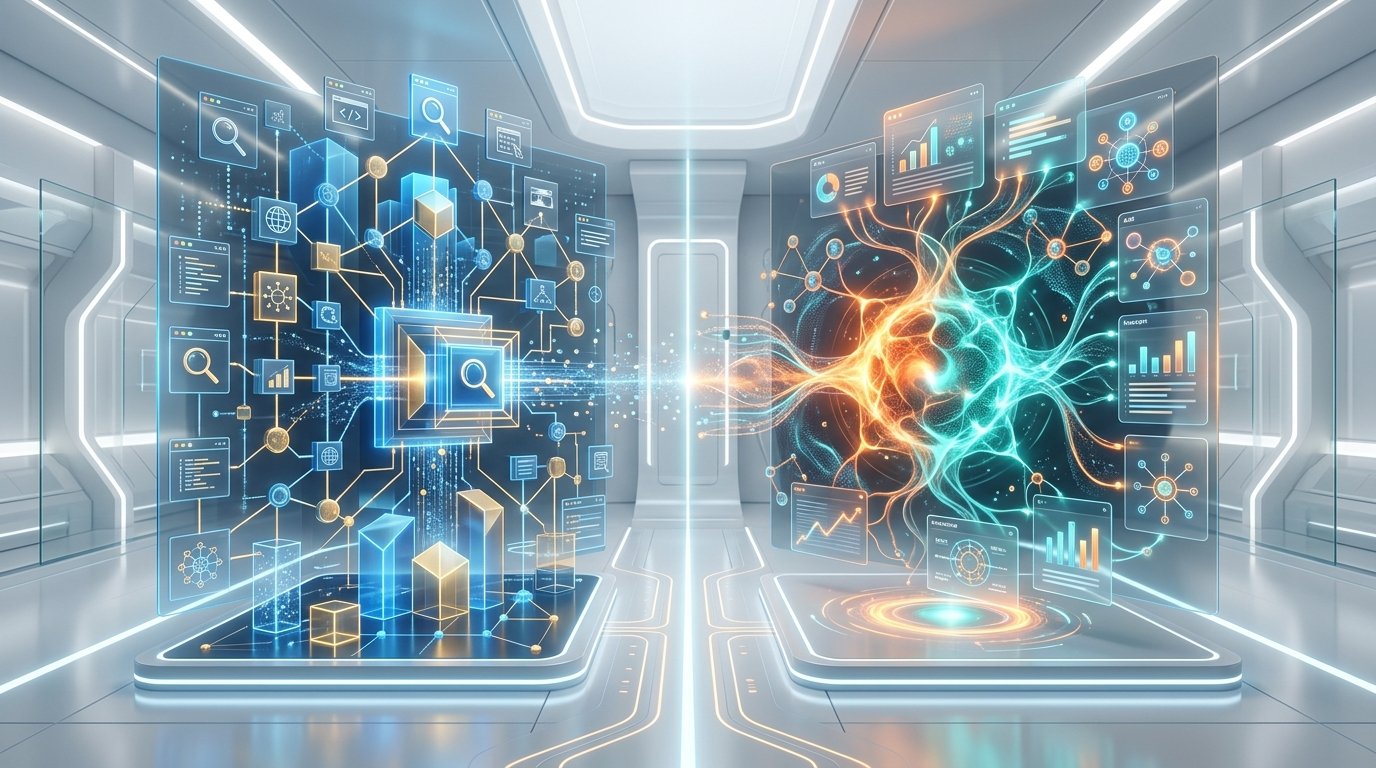
In 2026, marketing automation represents a centralized, event-driven infrastructure. It connects your website, advertising accounts, customer relationship management (CRM) database, instant messaging channels (such as WhatsApp and SMS), and sales scheduling software into a unified ecosystem.
Instead of operating on rigid, linear timelines, automated pipelines respond dynamically to user behavior. If a prospect downloads a technical whitepaper, visits your pricing page twice in 24 hours, and reads a case study, the system recognizes an escalating intent signal, automatically bumps their lead score, sends a contextual case proof via email, and notifies the account executive with a pre-written outreach brief. Learn more about our approach under Marketing Automation Services.
Why Growing Businesses Urgently Need Automation
Deploying marketing automation delivers four immediate operational breakthroughs:
- Reclaiming 20+ Hours Per Week: Automating data entry, follow-up scheduling, list segmentation, and meeting booking frees your highest-paid team members to focus on strategic client relationships and high-value closing conversations.
- Zero Lead Drop-Off: Every inquiry—regardless of whether it arrives at 2:00 PM on Tuesday or 11:30 PM on Sunday—is acknowledged and nurtured instantaneously.
- Consistent Buyer Experiences: Automation guarantees that every prospective customer receives calibrated messaging adhering to your brand guidelines, eliminating inconsistent ad-hoc communications.
- Predictable Revenue Scaling: Because automated systems scale without linear headcount additions, you can double or triple inbound inquiry volume without crashing your operational infrastructure.
The 8 Core Components of High-Performing Automation Pipelines
An enterprise-grade marketing automation architecture combines eight foundational building blocks:
1. High-Converting Lead Capture & Dynamic Landing Pages
Funnels begin at the point of capture. Modern landing pages leverage progressive profiling—asking for minimal information on initial visit (name and work email) and capturing additional firmographic details on subsequent interactions. Fast-loading, distraction-free landing pages convert traffic at significantly higher rates than cluttered homepage designs.
2. Intelligent CRM Workflows & Data Routing
Your CRM serves as the central nervous system. Automated workflows immediately enrich incoming contacts with technographic and firmographic data (company size, industry vertical, executive title), assign territory owners, and prevent duplicates from corrupting sales records.
3. Behavioral Email & Omnichannel Nurturing
Static drip campaigns alienate modern buyers. Behavioral nurturing dynamically branches based on real engagement: prospects who open an email and click a link to a case study enter an accelerated evaluation sequence, while unengaged contacts are smoothly transitioned into long-term educational newsletters.
4. Conversational AI Chatbots & Instant Response
Conversational agents deployed on your website provide 24/7 engagement. Utilizing natural language understanding, they answer technical questions, address pricing inquiries, and embed live calendar booking links directly inside the chat interface. Explore our Agentic AI Development for custom assistants.
5. Automated Lead Qualification & Predictive Scoring
Not every visitor is ready for a direct sales call. Automated scoring models assign positive points for high-intent actions (visiting pricing pages, reading technical documentation, requesting demo access) and negative points for low-intent behaviors. Once a threshold is reached, the lead automatically transitions from Marketing Qualified Lead (MQL) to Sales Qualified Lead (SQL).
6. Dynamic Retargeting & Custom Audience Syncing
Manual CSV uploads to Meta Ads and Google Ads are hopelessly outdated. Automated pipelines stream CRM segment updates directly into ad platforms via API. When a prospect becomes a customer, they are automatically excluded from acquisition ad sets and added to customer onboarding campaigns.
7. E-Commerce Cart & Lifecycle Automation
For online retail brands, automation is indispensable. Abandoned cart sequences, post-purchase replenishment triggers, VIP loyalty perks, and review request sequences generate predictable incremental revenue on autopilot. Review our E-commerce Solutions for multi-channel store architecture.
8. Agentic AI-Driven Autonomous Workflows
In 2026, modern pipelines incorporate AI agents capable of reasoning. When an inquiry includes complex, unstructured questions, an AI agent reviews company technical documentation, drafts a bespoke personalized response, checks calendar availability, and submits the draft to the sales rep for one-click approval.
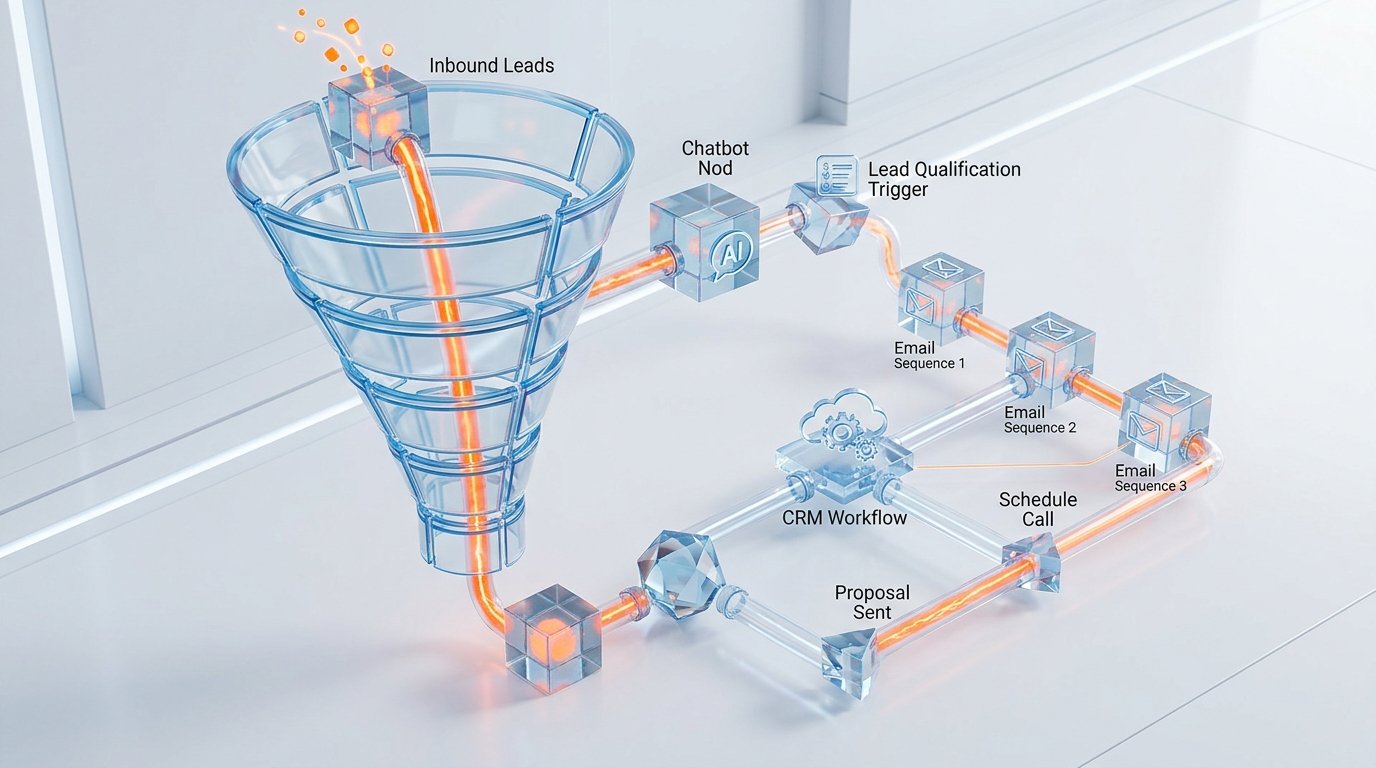
End-to-End Walkthrough: The 4-Stage Automated Funnel
To see these components in action, consider how a high-growth B2B enterprise automates its buyer journey:
High-Intent Capture on High-Speed Landing Page
A prospective buyer clicks an ad or organic search result and arrives on a dedicated landing page. They interact with an interactive ROI calculator. Upon submitting their email to receive the custom report, an automated webhook triggers immediately: the contact is created in the CRM, tagged with their specific industry vertical, and sent the report within 30 seconds.
Behavioral Education & Intent Tracking
Over the next 72 hours, the prospect receives three tailored case studies matching their exact industry. When the prospect clicks on an implementation breakdown, their lead score crosses the qualification threshold. The system sends an automated SMS/WhatsApp message offering a 15-minute diagnostic call with direct calendar integration.
Frictionless Scheduling & Pre-Call Preparation
The prospect selects a time slot. The automation automatically generates a calendar invite, creates a Zoom/Google Meet link, updates the CRM opportunity stage, and compiles a dossier for the sales executive summarizing the prospect’s website activity and downloaded materials.
Automated Proposal Delivery & Onboarding Kickoff
Following the consultation, the proposal is generated. If the proposal remains unopened after 48 hours, a gentle automated reminder is sent. Once digitally signed, the system instantly generates an invoice, triggers client onboarding workflows, and alerts the engineering team to commence setup.
Measuring Automation Performance: 4 Vital KPIs
To evaluate the commercial health of your automated pipeline, track these four core indicators:
| Metric | Traditional Industry Benchmark | Automated Pipeline Target | Strategic Impact |
|---|---|---|---|
| Lead Response Time | 4 to 24 hours | Under 2 minutes | Massively increases first-contact connection and qualification rates |
| MQL to SQL Conversion | 12% – 18% | 30% – 45% | Ensures sales reps spend time solely with verified purchase intent |
| Sales Cycle Velocity | 45 to 60 days | 20 to 30 days | Shortens time to revenue by removing scheduling and follow-up friction |
| Admin Time Per Lead | 35 minutes | Under 3 minutes | Directly reduces customer acquisition cost (CAC) and operational overhead |
How to Implement Marketing Automation Without Disruption
Attempting to automate every workflow simultaneously is a recipe for chaos. Start with high-impact, low-complexity wins:
- Map Your Existing Customer Journey: Document every step a customer takes from initial inquiry to final purchase. Identify where prospects routinely stall.
- Cleanse Your Data Architecture: Audit your contact database, eliminate duplicate fields, and standardize lifecycle stage definitions.
- Automate Immediate Inbound Response: Set up instant autoresponders, calendar booking links, and conversational website chat first.
- Deploy Lead Scoring & CRM Routing: Establish clear criteria for when a lead should transition from marketing nurturing to sales outreach.
- Continuously Audit & Calibrate: Review analytics monthly to identify low-performing email steps, broken webhooks, or messaging fatigue.
Conclusion: Engineering Scalable Growth
Marketing automation is not a replacement for human relationship-building; it is its greatest catalyst. By handling repetitive data entry, follow-ups, and calendar coordination through automated pipelines, your team can concentrate entirely on what truly matters: providing strategic value, solving customer problems, and closing deals.
Stop letting high-value opportunities slip through operational cracks. Waizz Media designs, builds, and manages custom marketing automation and Agentic AI workflows that scale revenue predictably.