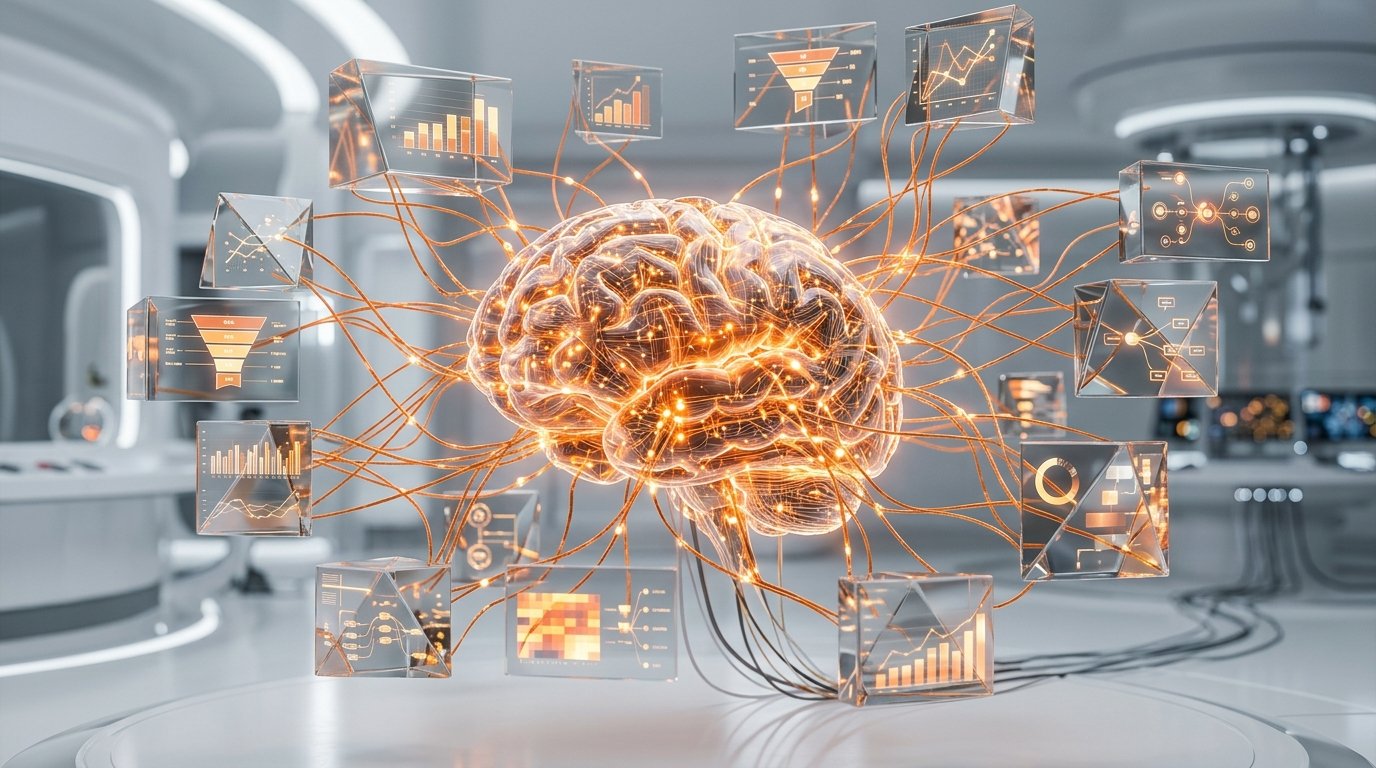
The digital marketing landscape has reached an unmistakable inflection point. For the past three years, businesses treated artificial intelligence primarily as a novelty copywriter—a tool to generate social captions, outline blog drafts, or tweak ad headlines. But in 2026, surface-level generative prompts no longer confer a competitive advantage. When every competitor has access to the exact same generic language models, copy becomes commoditized, ad fatigue spikes, and customer acquisition costs climb.
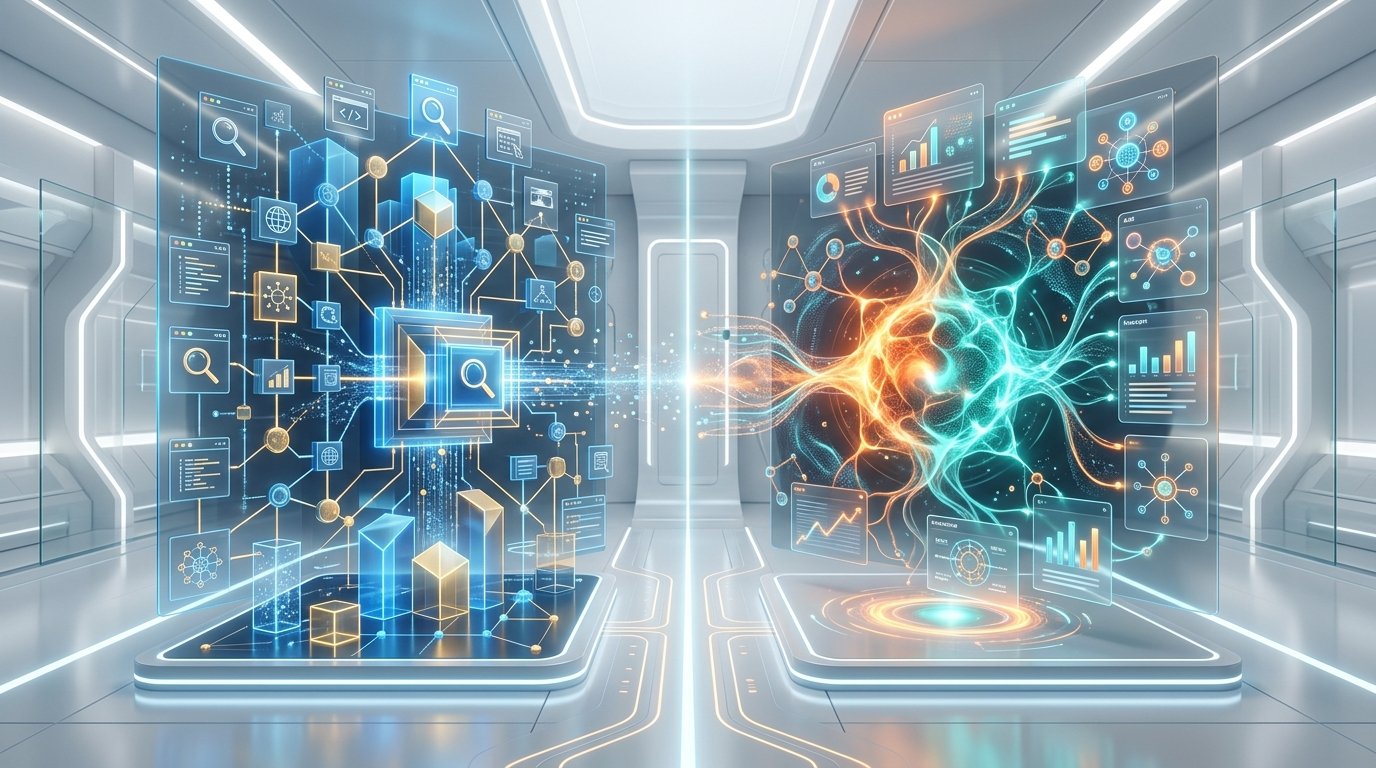
Sustainable growth now belongs to businesses that embrace true AI-powered digital marketing. This evolution shifts the paradigm from fragmented, manual execution to integrated, continuous intelligence. Rather than using isolated tools to produce marketing collateral, pioneering companies engineer interconnected systems where data analysis, predictive bidding, dynamic content personalization, and multi-agent workflow automations operate in cohesive harmony.
In this guide, we break down what an enterprise-grade AI marketing strategy looks like in 2026, explore how AI powers every level of the customer journey, and provide a concrete framework to modernize your marketing engine without wasting resources on hype.
"In 2026, AI is no longer a tool you query in a browser tab. It is an ambient layer woven directly into your CRM, ad platforms, web properties, and communication funnels, making real-time decisions at machine speed."
The Evolution: From Generative AI to Agentic Marketing Systems
To understand why traditional playbooks are faltering, consider how quickly the technology stack has matured. The first wave was Predictive Analytics (identifying statistical correlations in past traffic). The second wave was Generative AI (producing text, images, and audio on demand).
We have now entered the third wave: Agentic AI. Unlike static chatbots that wait for user instructions, autonomous agents possess goal-directed agency. They can perceive digital signals (such as a drop in ad conversion rates or an influx of inbound inquiries), reason through possible remedies based on historical performance, take direct actions via application programming interfaces (APIs), and calibrate their approach based on the outcome.
When applied to digital marketing, this technological capability eliminates the latency that typically plagues human-managed campaigns. Instead of waiting for a weekly sprint review to reallocate ad spend, an agentic marketing engine detects anomalies and reallocates capital between Google Ads, Meta Ads, and LinkedIn campaigns in sub-second intervals.
8 Core Pillars of an AI-Powered Digital Marketing Engine
A high-performing digital marketing strategy does not rely on a single breakthrough feature. It succeeds through the compounded leverage of eight interconnected functional areas:
1. Marketing Automation & Event-Triggered Workflows
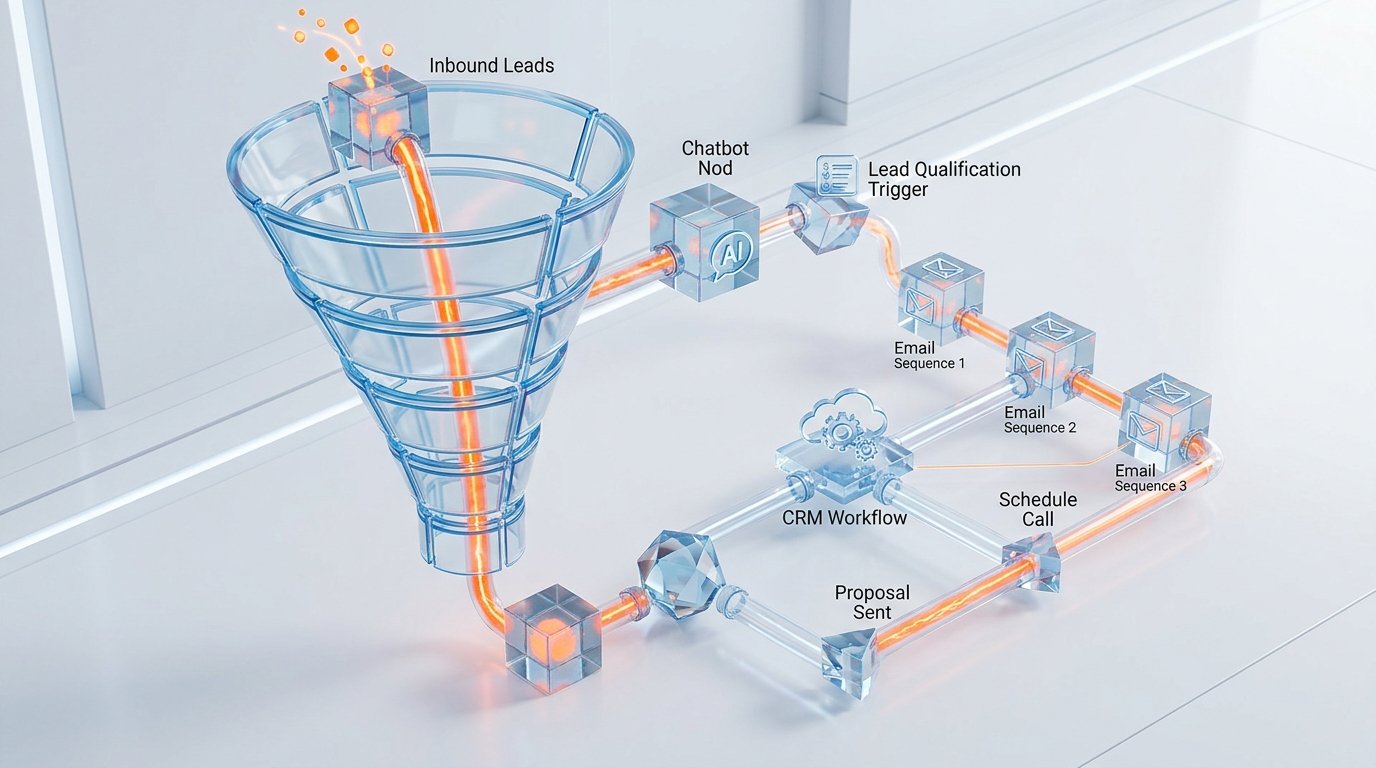
Modern marketing automation connects disparate software systems into unified, event-driven pipelines. When a prospective buyer interacts with a case study or requests a consultation, AI orchestrates the entire response sequence: updating CRM records, triggering hyper-relevant email follow-ups, and alerting sales reps with conversational summaries.
2. AI-Assisted Content Creation & Personal Branding
High-quality content remains the foundation of brand trust. AI does not replace human perspective, editorial judgment, or lived industry experience. Instead, it supercharges the creative pipeline. Teams use AI to analyze customer support logs for recurring pain points, extract compelling narrative hooks, draft tailored video scripts, and adapt long-form thought leadership into multi-platform visual assets. Learn more about our approach to Personal Branding & Content Creation.
3. Autonomous Customer Communication & Conversational AI
Today’s buyers expect immediate, intelligent answers. Rule-based decision-tree bots that frustrate users with rigid menus are obsolete. Modern conversational AI assistants interpret nuance, answer technical queries by querying company documentation via Retrieval-Augmented Generation (RAG), and guide high-intent prospects directly toward booking qualified meetings.
4. Closed-Loop Lead Generation & Predictive Scoring
Not all traffic is created equal. AI models analyze hundreds of behavioral parameters—time on page, scrolling depth, referral source, company size, and technographic markers—to score leads instantaneously. Sales teams spend their high-value hours engaging only pre-qualified, sales-ready prospects, while top-of-funnel leads receive automated educational nurturing.
5. Dynamic Web & Experience Personalization
Static website experiences produce mediocre conversion rates. With client-side AI adaptation, landing page headlines, case study proofs, and product recommendations dynamically calibrate based on visitor industry, geography, or past brand touchpoints.
6. Predictive Data Analysis & Attribution Modeling
Third-party cookie deprecation and privacy regulations have disrupted legacy analytics. AI overcomes fragmented tracking through probabilistic attribution modeling, stitching together multi-touch attribution journeys across paid ads, social engagement, email, and organic search.
7. Advertising Optimization & Algorithmic Bid Arbitrage
Within platforms like Meta Ads and Google Ads Performance Max, AI models test thousands of creative combinations, audience signals, and bidding thresholds. Exploring our Growth & Performance Marketing services shows how algorithmic bidding unlocks predictable scale while protecting profit margins.
8. SEO & Answer Engine Optimization (AEO)
Search is no longer confined to ten blue links. With Google AI Overviews, Perplexity, and conversational search assistants dominating discovery, businesses must structure their content with entity-rich schemas and verified domain authority so AI answer engines cite them as primary sources.
| Marketing Capability | Traditional Manual Approach | AI-Powered Modern Engine |
|---|---|---|
| Ad Optimization | Weekly manual bid changes, delayed creative refreshes | Real-time autonomous bid calibration, predictive creative testing |
| Lead Qualification | Manual form reviews, delayed email follow-up | Instant semantic scoring, autonomous chatbot booking |
| Content Distribution | One-size-fits-all publishing schedule | Dynamic channel adaptation, contextual personalization |
| Data Attribution | Last-click bias, fragmented spreadsheet data | Multi-touch algorithmic modeling, predictive LTV forecasting |
A Practical 4-Stage Implementation Strategy for 2026
Transforming your organization’s marketing capabilities requires discipline, not blind experimentation. At Waizz Media, we recommend implementing AI systems through four structured phases:
Centralize First-Party Data & Identify High-Friction Chokepoints
Before deploying automated systems, audit your current customer journey. Where do leads stall? Are form submissions languishing for hours before a response? Clean your CRM data and establish unified event tracking so downstream AI models receive clean, unbiased inputs.
Build Event-Driven Trigger Pipelines
Deploy foundational workflow automations connecting web properties, landing pages, CRM platforms, and communication channels. Automate high-frequency, rule-based operations first: instant meeting scheduling, lead enrichment, and cart-abandonment follow-ups.
Integrate Goal-Oriented AI Agents for Acquisition & Inbound
Introduce specialized agentic systems: autonomous customer assistants trained on your product catalog, creative testing agents that iterate ad variations, and predictive bidding models that manage budget pacing across campaigns. Explore our custom Agentic AI Development capabilities.
Establish Human-in-the-Loop Governance & Calibration
AI systems should never run unchecked. Implement clear guardrails and performance dashboards. Human strategists must continually evaluate brand voice consistency, review anomaly alerts, and calibrate model objectives against bottom-line revenue.
5 Costly Mistakes Businesses Make with AI Marketing
Adopting AI without a clear framework frequently leads to wasted expenditure and brand dilution. Avoid these five critical traps:
- Publishing Uncalibrated AI Content: Flooding your website with mass-produced AI articles devoid of first-hand research or original perspective results in severe search penalties and destroys customer trust.
- Siloing Tools Without Workflow Integration: Subscribing to a dozen standalone SaaS AI tools without connecting them into a single CRM or data warehouse creates disjointed customer experiences.
- Neglecting Data Privacy & Compliance: Ingesting sensitive customer records into unvetted public LLM endpoints exposes your organization to severe regulatory and legal liabilities.
- Ignoring Human Review: Fully autonomous systems require human strategic guardrails. A high-converting marketing engine pairs machine computation with human taste and empathy.
- Chasing Vanity Metrics Over Revenue: High impression volume or automated vanity clicks mean nothing if your pipeline fails to convert qualified prospects into paying clients.
Future Considerations: The 2026–2027 Horizon
As AI capabilities continue their exponential trajectory, two emerging dynamics will redefine how brands win market share over the next eighteen months:
1. Machine-to-Machine Commerce (Agentic Buyers): Consumers and B2B procurement managers will increasingly delegate research and purchasing tasks to their own personal AI agents. Your digital presence must be optimized not only for human eyes, but for autonomous buyer agents evaluating structured pricing, API availability, and verifiable credentials.
2. Zero-Click Synthesis & Ambient Search: Search experiences will continue shifting from browser tabs to ambient voice interfaces, smartwatch summaries, and AI synthesis engines. Brands that fail to establish verified entity authority and Answer Engine Optimization will find themselves invisible in this synthesized ecosystem.
Conclusion: Turning Intelligent Systems Into Your Greatest Asset
AI-powered digital marketing is not an all-or-nothing leap into experimental territory. It is a systematic process of engineering smarter, faster, and more responsive feedback loops between your audience and your business.
By automating repetitive tasks, predicting user intent, personalizing every touchpoint, and maintaining rigorous creative excellence, your business can achieve the kind of compounded growth that legacy marketing approaches simply cannot match.
Ready to engineer an interconnected marketing and AI system designed for predictable revenue? Whether you need performance marketing scale, autonomous agentic workflows, or end-to-end automation pipelines, Waizz Media is here to partner with you.